
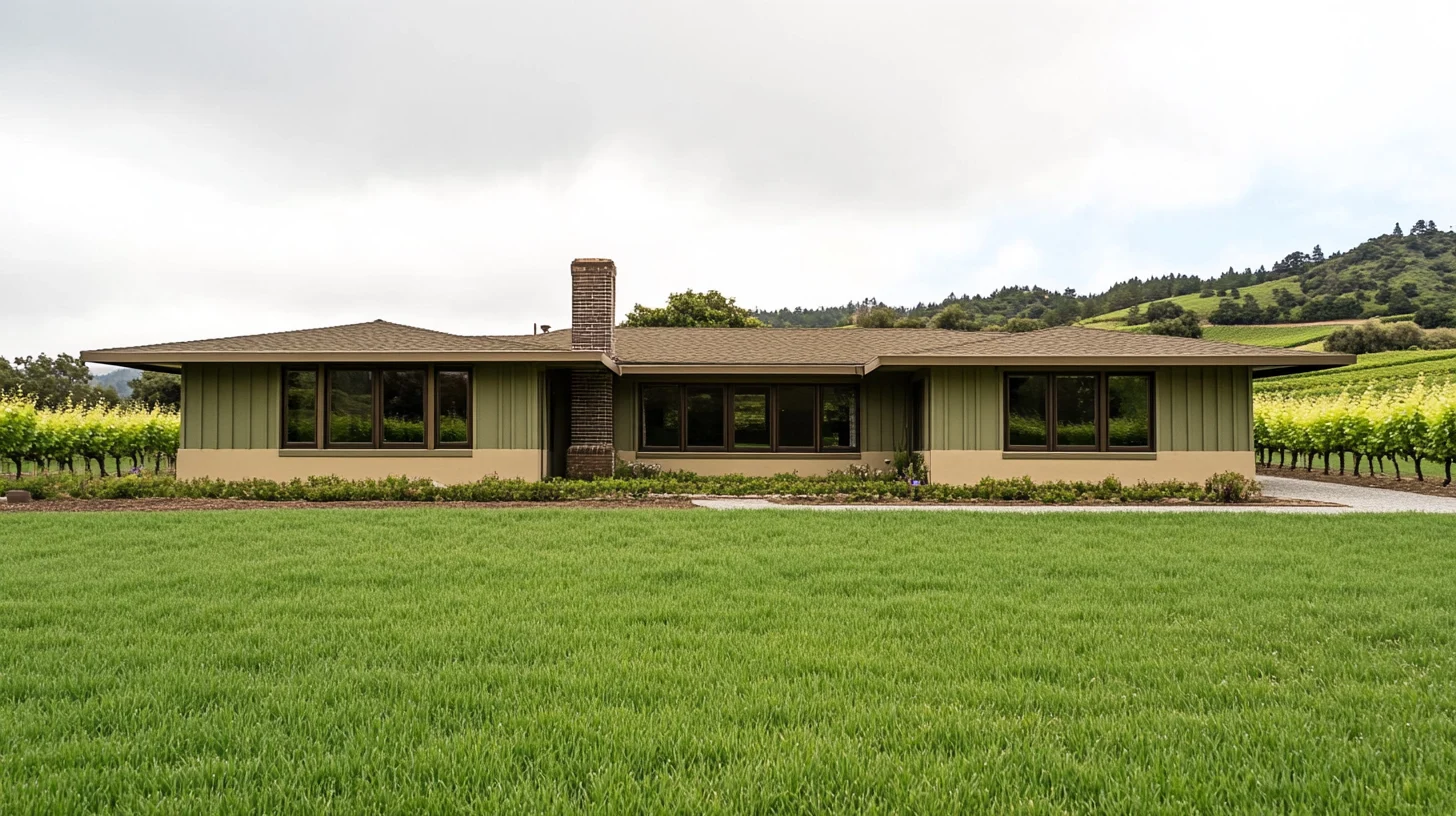
Healdsburg summers are no joke. When the valley heats up, it's common for afternoons here to push past 100 degrees, and any glass facing south or west turns a room into an oven. That's the main reason people call us from Healdsburg: the house is comfortable in the morning and miserable by four. The town has two very different kinds of homes to deal with, too. Around the Plaza and the older streets near it, you'll find Victorians and craftsman houses with original wood windows. Out toward Dry Creek, Alexander Valley and the hills above town, there are ranch houses and newer homes with big glass facing the vineyards, many of them sitting in wildfire country.
We handle both. On the older homes near the Plaza, wood and fiberglass windows keep the look of the house while finally blocking the heat. On the hillside and valley homes, the focus is on high-performance glass and tempered panes for fire zones. And if a big slider is the room's worst offender, patio and sliding door replacement often makes the biggest difference. Call for a free estimate.
Glass That Stands Up to Healdsburg Heat
For a hot inland town, the glass matters more than the frame. What you want is two panes with a Low-E coating tuned to block solar heat, measured by the solar heat gain rating on the window's label. Lower numbers mean less of the sun's heat gets through. On the west and south sides of a Healdsburg house, choosing glass rated low for solar heat gain can do more than anything else you change in the room. Frame choice still counts, especially on big openings. Fiberglass handles heat with very little expansion, so it keeps seals tight on wide picture windows that bake all afternoon. Dark frames look great against vineyard views, but in vinyl they absorb heat, which is another point for fiberglass on sunny walls. A few miles up 101 in Cloverdale, the summer heat is just as intense, and the same glass choices apply.
Fire Country Around Dry Creek and Alexander Valley
The 2019 Kincade Fire forced Healdsburg to evacuate, and the 2020 Walbridge Fire burned in the hills to the west. Much of the land around town, especially the wooded hillsides above Dry Creek and Alexander Valley, falls inside mapped fire hazard zones. In those zones, new windows have to be multi-pane with at least one pane of tempered glass, and that applies to glass in patio doors too. Tempered glass holds out against heat much longer than regular glass and keeps embers out of the house longer. If your home looks out over open grass, brush or vineyards on the slopes, it's worth upgrading those openings first, even if the rest of the house waits a year. You can check your address on CAL FIRE's hazard map, or we'll look it up when we come out. Our window replacement page covers how tempered glass and the energy code fit together.
Common Questions
Clad wood is usually the best match. It gives you real wood on the inside, an outer skin that holds up to the sun, and frame proportions close to the originals. Grilles can be ordered to match the old divided panes. For homes where upkeep matters more than historic accuracy, fiberglass with a painted finish is a close second and handles the heat well.
Often, yes. Guests notice a hot bedroom or a rattling slider, and they mention it in reviews. New windows with good solar glass keep rooms comfortable without the AC running all day, and quieter, tighter windows make the house feel newer. Vinyl or fiberglass keeps upkeep low between guests, and the work can usually be scheduled around bookings.