
Walk any street in Rohnert Park or Cotati and count the white window frames. Vinyl has been the go-to replacement window here for years, and it earned the spot. It doesn't rot when winter rain sits on the sill. It never needs scraping or paint. It seals tight, it's priced below wood and fiberglass, and today's frames look a lot better than the chunky vinyl of the '90s. For a typical ranch or tract home in Sonoma County, it's the window most homeowners pick once they see the options side by side.
Here's what to look for in a vinyl window, how the frame and glass work together, how we install them and where vinyl isn't the right call. That last part matters. If your home has historic trim or very large openings, wood and fiberglass windows may suit it better, and we'll say so during the estimate rather than sell you the wrong thing.
Signs Vinyl Is the Right Fit
Vinyl is the pick when the goal is a comfortable house and no more upkeep. It's a strong match for homes built from the '60s through the '90s with aluminum or builder-grade windows, for rentals and homes you plan to hold onto, for west-facing rooms that need better glass on a budget, and for anyone tired of painting wood sashes every few years. It handles moisture well too, which counts in the damp west county and near the creeks where morning fog hangs around. Where vinyl struggles is very wide openings, since the frame has to get bulkier to stay stiff, and dark exterior colors on walls facing the late-day sun.
Inside a Vinyl Window: Frames, Chambers and Low-E Glass
Cut a vinyl frame in half and it isn't solid plastic. It's a row of hollow chambers, thin PVC walls with air pockets between them, and those pockets slow down heat moving through the frame. Better frames have more chambers and welded corners, which keep them square and watertight for years. The glass does most of the work, though. A standard package is two panes with a sealed gap filled with argon gas, plus a Low-E coating, a very thin metal layer that reflects heat while letting light through. In Sonoma County, Low-E earns its keep in summer, when it stops the afternoon sun from cooking the room. For homes in fire hazard zones, we order the glass with at least one tempered pane.
How We Install Vinyl Windows
Nearly every vinyl job we do is a retrofit. We measure each opening across the top, middle and bottom, and again on both sides, then order to the smallest reading so the window fits square even if the old frame has settled. On install day, the old sash and any aluminum track come out, and we clean and check the frame. The new window sets in on shims, gets leveled and fastened through the frame, then insulated around the edge with low-expansion foam so the frame doesn't bow. Outside, a bead of caulk seals it to the old frame or the stucco. Inside, trim covers the gap. A standard bedroom window goes from old to new in well under a morning.
Vinyl, Fiberglass or Wood: Which One Fits Your House
Vinyl wins on price and upkeep. Fiberglass costs more but stays stiffer, so the frames can be slimmer, and it handles big openings and summer heat with less movement. It can also be painted, which vinyl generally can't. Wood looks right on older homes, especially the craftsman and Victorian houses around Petaluma and Healdsburg, but it only lasts if paint or an outer cladding keeps rain off it. For most houses built after 1960, vinyl is the practical choice. For a 1910 farmhouse outside Sebastopol, it probably isn't. During the estimate we walk through the trade-offs for your specific house so you can compare frame width and price side by side.
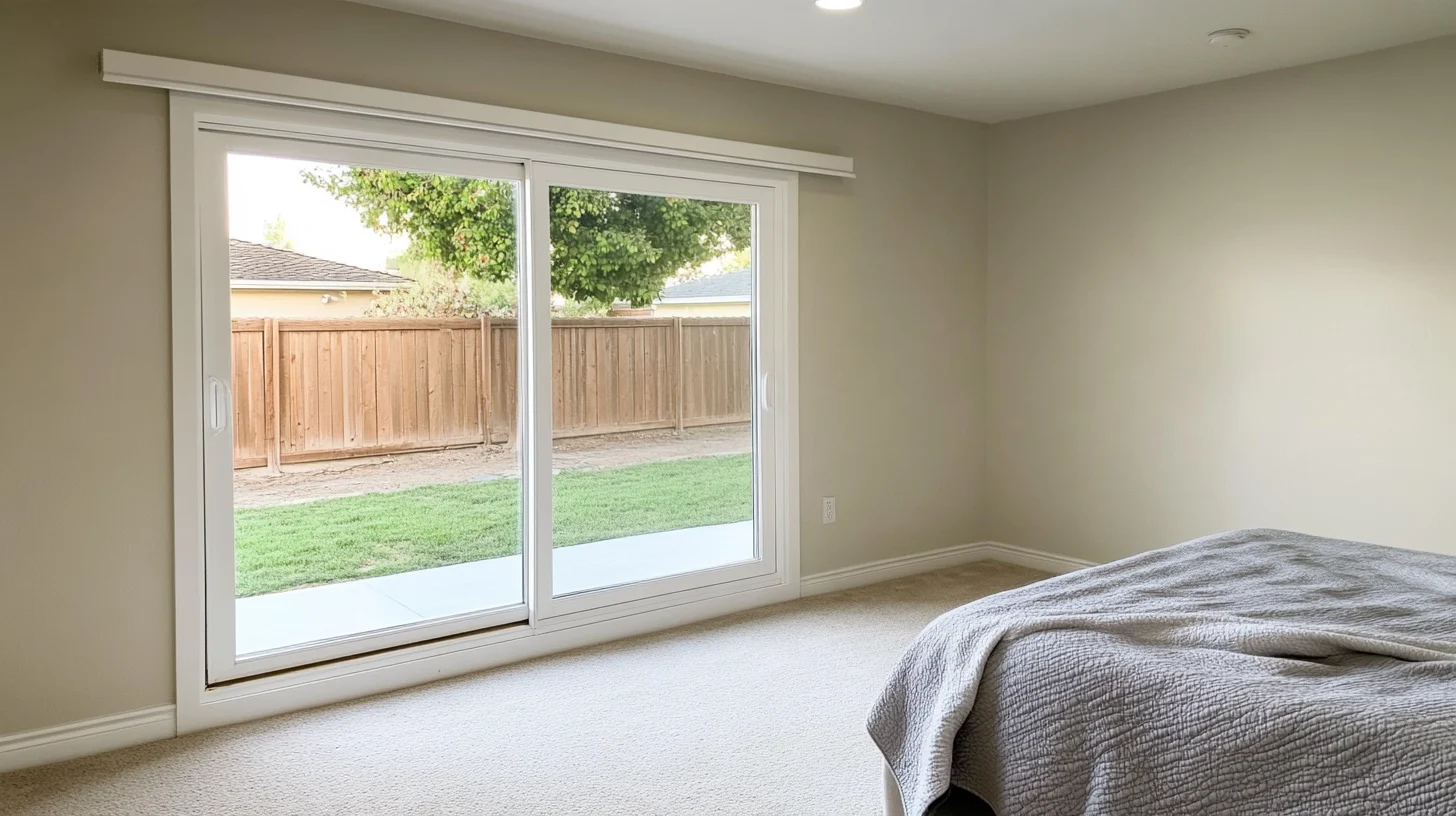
If your sliding glass door is as old as the windows, it's worth pricing patio and sliding door replacement at the same time, so the new door matches the new windows.
Common Questions
Quality vinyl windows handle Sonoma County summers fine in white and light colors. Trouble shows up mostly with cheap frames, and with dark colors on a west wall that bakes all afternoon, since dark vinyl absorbs more heat. If you want a dark exterior, we'll suggest a frame made for it, often with a heat-reflective finish, or point you toward fiberglass instead.
White is the classic, but factory colors have come a long way. Bronze, tan, gray and black are common, and some brands offer one color inside and another outside. The color is built into the frame or applied as a laminate at the factory. Painting vinyl yourself isn't a good idea, since paint can trap heat, peel off the smooth surface and void the warranty.
Vinyl frames can burn, so the frame isn't what makes a window fire-resistant. What the state code focuses on is the glass: in designated hazard zones, multi-pane units need at least one tempered pane, and vinyl windows ordered that way meet the glazing rule. Some homeowners in the highest-risk areas choose fiberglass or metal-clad frames for extra peace of mind.