
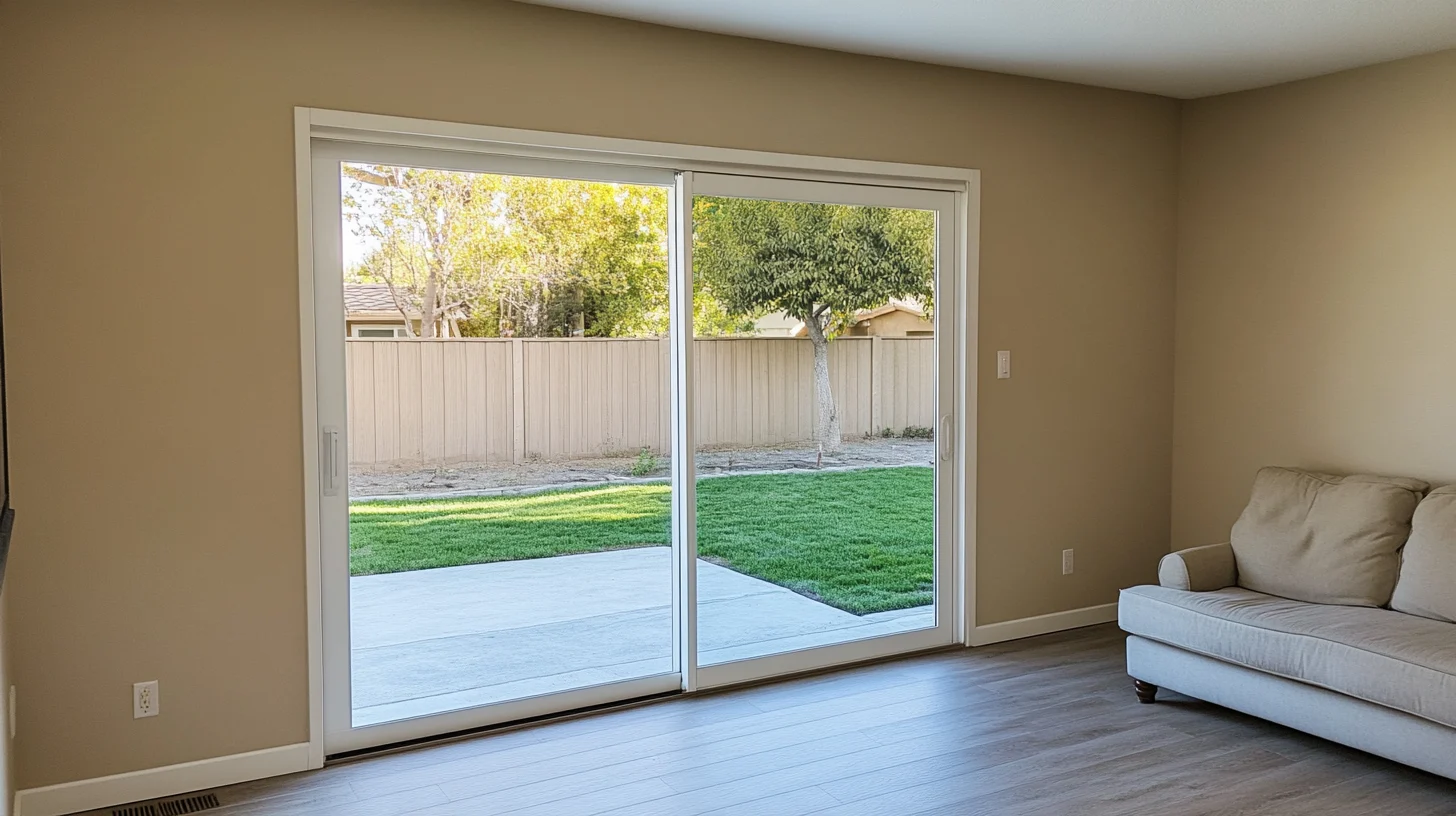
An old sliding glass door is usually the biggest single hole in the house. It's 6 to 8 feet of glass, often in an aluminum frame from the '70s, and it's the one opening everybody uses every day. So it wears out first. The rollers flatten and grind. Grit and dents pile up in the track. The weatherstripping shrinks until you can see daylight along the edge, and in a Healdsburg July the room behind it turns into a greenhouse. Up in Cloverdale, where winter mornings dip toward freezing, the same door sweats and drips onto the floor. Replacing it solves every one of those problems, and it's often the upgrade people notice most because they touch it a dozen times a day.
On this page we cover how to know the door has had it, what the safety-glass rules require, how we pull the old door and set the new one, and how sliding, French and swinging doors compare. If the windows on that wall are just as tired, our window replacement page explains how we handle doors and windows in one job.
When Your Patio Door Needs Replacing
Some door problems are cheap fixes and some aren't. New rollers or a lock can buy a few more years when nothing else is wrong. It's time for a new door when the frame has bent or pitted, when the glass between two panes has fogged, when water gets in at the sill during storms, or when the door is single-pane. Other signs: you have to lift and shove to get it moving, the lock never quite lines up, or you feel cold air at the edges standing a foot away. Swinging doors tell you differently, with sagging hinges, a gap at the top corner and wood swelling at the bottom where rain splashes. If you're replacing it anyway, it's a good moment to change styles, say from a slider to a hinged French door.
Safety Glass and Patio Doors, Explained Simply
Glass in any door is treated as a hazardous location under California's building code, which means it must be safety glass. In practice, that's tempered glass, the kind that breaks into small, dull pieces instead of long blades. Every new patio door we install comes with tempered glass, and you'll find a small etched mark in one corner that proves it. If your house is in a wildfire hazard zone, the same door also needs multi-pane glass with at least one tempered pane, which a standard dual-pane patio door already covers. For energy, patio doors are rated on the same U-factor and solar heat gain scale as windows, and California's Title 24 code sets limits on both. Lower numbers mean less heat getting through.
How We Replace a Patio Door
We protect the floor first, inside and out, since the door opening is usually right next to a deck or patio. The old panels lift out of the track, then we cut the frame loose from the wall and remove it in pieces. With the opening bare, we look for soft wood at the bottom, where old doors almost always leak. Before the new frame goes in, we install a sill pan, a shallow tray under the door that sends stray water back outside instead of into the subfloor. The new frame is set level and plumb, fastened and sealed, then the panels go in and get adjusted until they glide and lock without effort. We finish the trim inside and out and haul the old door away. A single door is usually a one-day job.
Sliding, French or Swinging: Which Door Fits
A sliding door is the space-saver. Nothing swings into the room or onto the deck, the glass is wide, and modern sliders roll smoothly on stainless or steel rollers. French doors are two hinged panels that open from the middle, and they give you the widest clear opening and a more traditional look, but you need floor space for them to swing. A single swinging patio door, often with a fixed glass panel beside it, sits in between. Sliders suit most ranch and tract homes. French doors suit older and craftsman-style houses. Whichever style you pick, you can choose the frame material too, and matching the door to your new windows keeps the wall looking like one piece.
If the problem is only a fogged pane and the door itself still works, ask about foggy glass replacement before buying a whole new door.
Common Questions
Most of the time, yes. Sliding doors come in common widths, with 6 and 8 feet the most typical, and most makers also build custom sizes. We measure the rough opening once the old frame is out of the way, then order a door that fits with room for shims and sealant. If you want a wider door or a different style, the opening can be enlarged, which adds framing work and may need a permit.
The frame and glass matter more than the style. A fiberglass or vinyl frame with dual-pane Low-E glass and argon fill will beat an old aluminum slider by a wide margin. Hinged doors tend to seal a bit tighter than sliders because they close against weatherstripping on every side, but a good modern slider comes close. Check the U-factor on the label: lower is better.
Usually it's worn rollers, a dirty or dented track, or a frame that shifted as the house settled. Cleaning the track and putting in new rollers fixes a lot of doors. When the bottom track is bent, the frame is out of square or the panel has sagged, the problem keeps coming back, and that's the point where a new door is the better use of your money.